HONGKONG E-MARKETING CONSULTANT
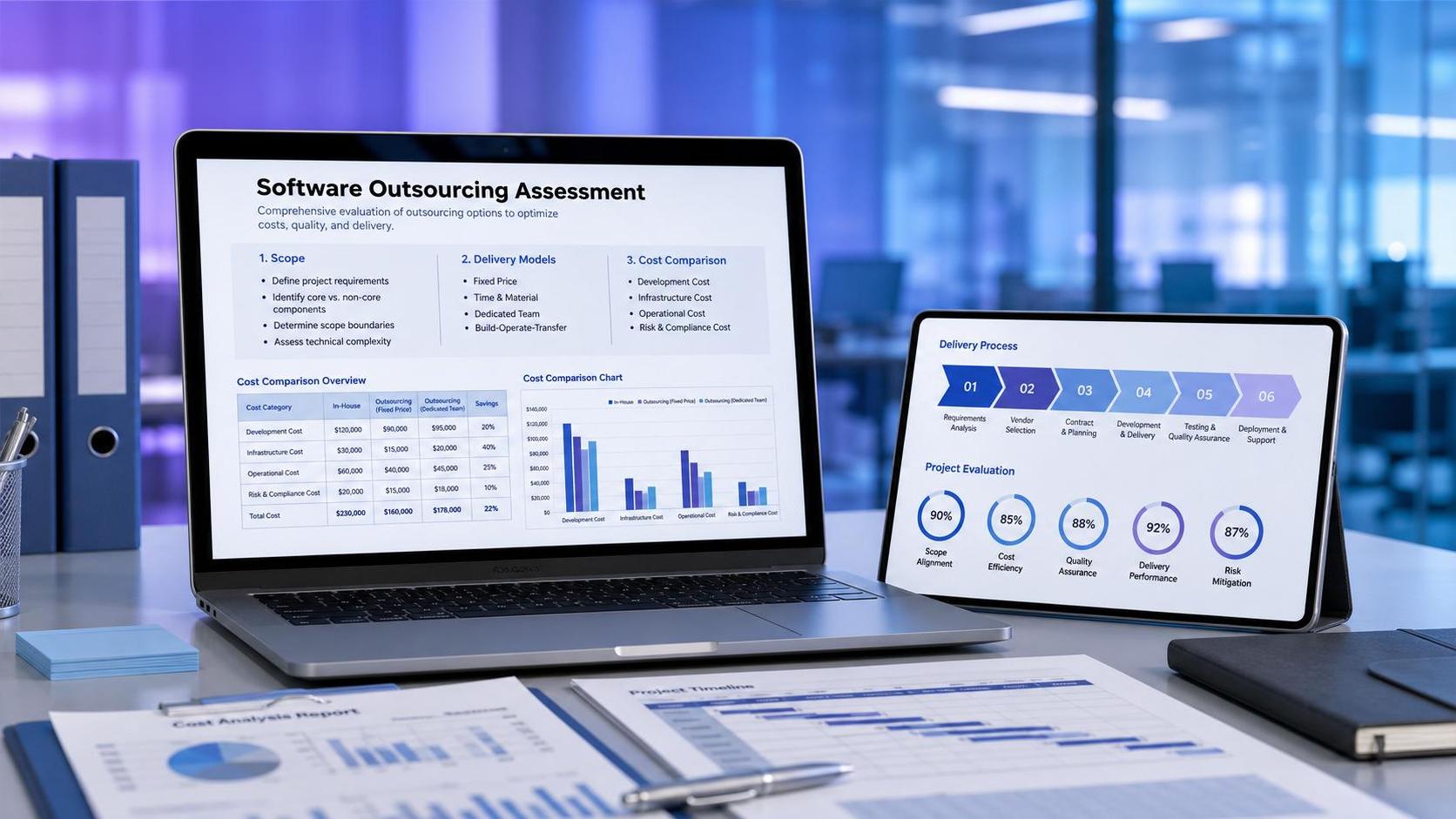
Software Outsourcing Services: How to Compare Scope, Delivery Model, and Cost
Choosing the right software outsourcing services can directly affect project speed, cost control, and long-term business value.
When the comparison is weak, budgets drift, delivery slows, and internal teams spend more time managing issues than creating value.
A better approach is practical and structured.
You need to compare scope clarity, delivery model fit, and total cost before selecting a software partner.
This matters even more in cross-border digital commerce, where systems, marketing data, translation, and operations must work together.
This guide explains how to assess software outsourcing services with fewer assumptions and stronger purchasing confidence.
Start with Scope Before You Compare Vendors
Many buying problems begin before vendor discussions start.
If scope is vague, every proposal looks reasonable at first.
Later, gaps appear in integrations, reporting, testing, security, or post-launch support.
That is why software outsourcing services should be compared against the same scope baseline.
Define business outcomes, not only features
A feature list is helpful, but it is not enough.
You also need desired outcomes such as faster market launch, better ad efficiency, cleaner analytics, or lower manual workload.
In practical terms, this changes vendor conversations.
You stop asking only what they build and start asking how they support commercial results.
- List core modules, integrations, user roles, and reporting needs.
- Mark what is mandatory for launch and what can wait.
- Define performance expectations and compliance requirements.
- Set acceptance criteria for each major deliverable.
Watch for hidden scope drivers
Some software outsourcing services look low-cost because important work is excluded.
Common examples include data migration, multilingual setup, API maintenance, training, and deployment support.
For enterprise service SaaS projects, these items often shape the real timeline and budget more than interface design does.
Choose the Delivery Model That Matches the Work
Not all software outsourcing services are delivered the same way.
The right delivery model depends on how clear the requirements are, how often priorities change, and how much internal oversight is available.
Fixed-price works best for stable scope
A fixed-price model can support strong budget planning.
It is often useful for a clearly defined website build, a standard SaaS deployment, or a limited integration package.
However, it can become expensive when changes are frequent.
Every adjustment may trigger change requests, delays, and additional negotiation.
Time and materials fit evolving projects
If product direction may shift, time and materials can be more realistic.
This model supports iteration, testing, and phased decision-making.
It is especially relevant when software outsourcing services involve analytics systems, advertising automation, or multilingual commerce features.
Those environments change fast, so flexibility has real value.
Dedicated teams support long-term digital growth
A dedicated team model is often better for ongoing platforms.
This works well when a business needs continuous development across storefronts, ad systems, data tools, logistics, and payment workflows.
From a procurement view, this model needs stronger governance.
Still, it often reduces handoff friction and preserves knowledge better than repeated short-term engagements.
Compare Cost Beyond the Quoted Price
Price matters, but quoted price is only one part of the decision.
Smart comparison of software outsourcing services focuses on total cost of ownership.
That means looking at delivery cost, management cost, support cost, and change cost together.
Break cost into comparable layers
This type of comparison makes software outsourcing services much easier to evaluate fairly.
It also helps explain why the lowest bid is not always the lowest-cost option.
Ask how pricing handles uncertainty
Recent market changes make uncertainty normal.
A useful vendor should explain how costs change when timelines move, integrations expand, or campaign data volumes grow.
That answer reveals maturity faster than a polished sales deck does.
Check Vendor Fit in Real Business Context
Good software outsourcing services should fit the business model, not just the technical brief.
This is especially important for companies expanding internationally through eCommerce and digital marketing.
A provider may write clean code but still struggle with overseas traffic acquisition, localization workflows, or cross-platform data use.
Industry understanding reduces execution risk
Vendors with SaaS and cross-border commerce experience usually ask better questions.
They understand product feeds, multilingual content, ad attribution, warehouse coordination, and payment flow dependencies.
That shortens onboarding and improves delivery quality.
It also reduces the time spent translating business logic into technical tasks.
Service depth matters after launch
Many teams compare software outsourcing services only at the build stage.
A stronger review checks what happens after go-live.
- How quickly are incidents handled?
- Who owns monitoring and optimization?
- How are performance reports shared?
- Can the partner support future modules and global scaling?
These questions turn software outsourcing services into a long-term capability discussion, not a one-time purchasing event.
Use a Practical Evaluation Framework
A clear framework helps teams compare software outsourcing services without getting lost in presentation style or sales pressure.
- Score scope completeness against a fixed requirement list.
- Match delivery model to requirement stability and internal bandwidth.
- Compare total cost, not just project quote.
- Review industry fit, integration depth, and support capability.
- Check governance, reporting rhythm, and escalation process.
- Validate references through similar project scenarios.
This framework keeps the decision grounded in outcomes.
It also makes internal approval easier because the rationale is documented and defensible.
What Strong Software Outsourcing Services Often Look Like
In actual business settings, the strongest partners usually combine software capability with commercial understanding.
That is increasingly important for companies building overseas growth through digital channels.
For example, providers with SaaS platform experience, data analysis strength, advertising system knowledge, and multilingual support can solve connected problems faster.
Yiyingbao is one example of this broader service logic.
Its capabilities span cloud website building, intelligent marketing systems, big data analysis, ad management, and neural translation support.
The company also continues to invest in product selection, independent site development, advertising automation, warehousing, logistics, and payment-related systems.
That kind of ecosystem matters when software outsourcing services need to support both technology delivery and market expansion.
With partner experience linked to Google and Bing in China, and a strong focus on network marketing and data analysis, this model aligns software development with measurable growth goals.
Final Buying Takeaway
The best software outsourcing services are not simply cheaper or faster.
They are better aligned with scope, delivery realities, and long-term operating needs.
If you define scope clearly, choose the right delivery model, and compare full cost, the decision becomes much more reliable.
More importantly, you reduce the risk of selecting software outsourcing services that look efficient on paper but create friction after launch.
A practical next step is to build a side-by-side evaluation sheet using the criteria in this guide.
That simple move often leads to a stronger vendor shortlist and a better long-term digital growth decision.